
Cameroon Economic Outlook: Leveraging Forest Resources and Natural Assets for Sustainable Growth
October 16, 2025

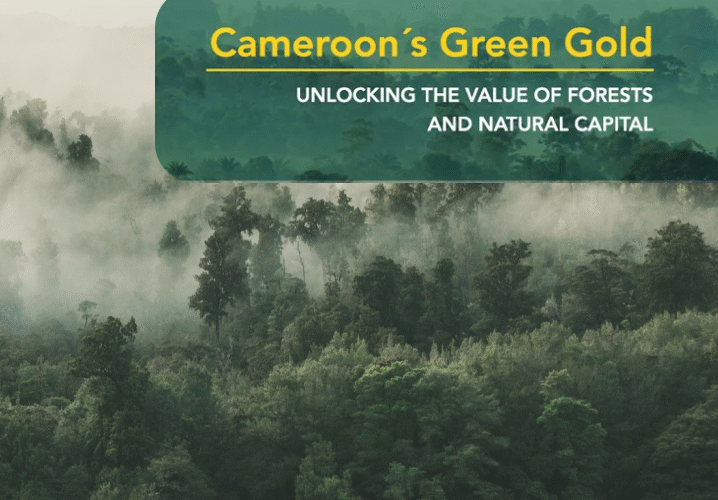
YAOUNDÉ, July 15, 2024 — The World Bank Group has launched the 2025 Cameroon Economic Update, titled “Cameroon’s Green Gold: Unlocking the Value of Forests and Natural Capital.”
The report presents an in-depth analysis of Cameroon’s recent economic trends, medium-term prospects, and the pivotal role that natural wealth accounting plays in shaping sustainable, inclusive development.
It underscores how responsible forest and natural resource management could serve as a catalyst for economic transformation, ensuring long-term prosperity while safeguarding the environment for future generations.
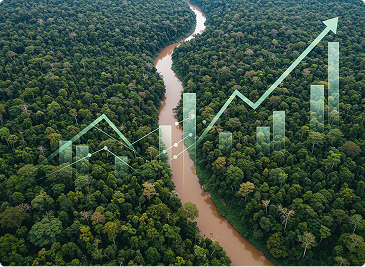
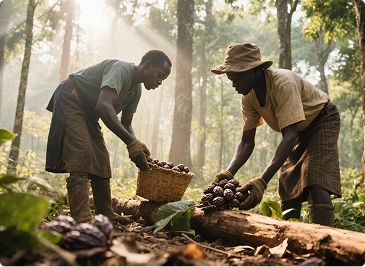
According to the report, Cameroon’s GDP expanded by 3.5% in 2024, up from 3.2% in 2023, buoyed by rising cocoa prices, higher cotton yields, and improved power supply.
Meanwhile, inflation fell sharply—from 7.4% in 2023 to 4.5% in 2024—thanks to tighter monetary policies, price controls, and easing import costs.
The current account deficit narrowed from 4.1% to 3.4% of GDP, largely driven by the cocoa export surge. However, the overall fiscal deficit widened to 1.5% of GDP (up from 0.7% in 2023), as increased government spending outpaced revenues.
Public debt rose marginally from 46.1% to 46.8% of GDP, mainly due to higher external borrowing.
“Cameroon’s economy has demonstrated remarkable resilience amid external shocks, yet
structural weaknesses — particularly in infrastructure — continue to constrain its full potential,”
said Robert Utz, World Bank Lead Country Economist and co-author of the report.
“A bold fiscal reform agenda is essential to bridge these gaps and accelerate productivity
across all sectors.”
Looking ahead, the report forecasts average real GDP growth of 3.9% between 2025 and 2028, supported by expanded power generation, public investment, and construction activity.
Inflation is projected to continue its downward trend, reaching the CEMAC target of 3% by 2027.
However, the current account deficit is expected to hover around 4.0% of GDP over the medium term due to declining oil output and prices, mixed results from industrial policies, and higher import needs tied to investment programs.
While debt levels remain sustainable, liquidity pressures pose a high risk of debt distress, highlighting the importance of prudent fiscal management and diversification.
For the first time, the report introduces national wealth accounting as a strategic policy tool, helping decision-makers assess Cameroon’s capacity to generate future income and sustain development.
Between 1995 and 2020, Cameroon’s total national wealth rose from $311 billion to $553 billion. Yet, wealth per capita declined by 11% over the same period — a clear signal that population growth has outpaced wealth creation.
Furthermore, Adjusted Net Savings (ANS) — a key sustainability indicator that accounts for resource depletion and investment in human capital — was moderately negative from 2010 to 2020. This suggests that Cameroon is consuming its natural assets faster than it is replenishing them.
The report warns of accelerating forest loss since 2010, driven primarily by agricultural expansion into lowland forests. Between 2010 and 2020, forest conversion occurred at five times the rate of the previous decade. Satellite data also reveals troubling declines in tree height, canopy density, connectivity, and overall ecosystem health.
“To reduce the environmental footprint of growth and protect its natural wealth, Cameroon should prioritize the conservation of high-value, vulnerable ecosystems,”
said Cheick F. Kanté, World Bank Country Director for Cameroon, Central African Republic, Republic of Congo, Gabon, and Equatorial Guinea.
“Transitioning toward a forest-based service economy — through ecotourism, medicinal research, and sustainable forest management — could unlock immense economic and ecological value.”
As Cameroon pursues its Vision 2035 goal of becoming an emerging economy, the report stresses the need to diversify beyond primary commodities such as oil, cocoa, and timber.
With one of Africa’s most unique and biodiverse ecosystems, Cameroon has the potential to build a competitive tourism and green services sector — one that can generate jobs, attract investment, and preserve natural capital.
By integrating wealth accounting into national planning, implementing fiscal reforms, and fostering green growth, Cameroon can ensure that its “green gold” — its forests and natural resources — become a foundation for shared prosperity and environmental resilience.


Leave Your Comment